
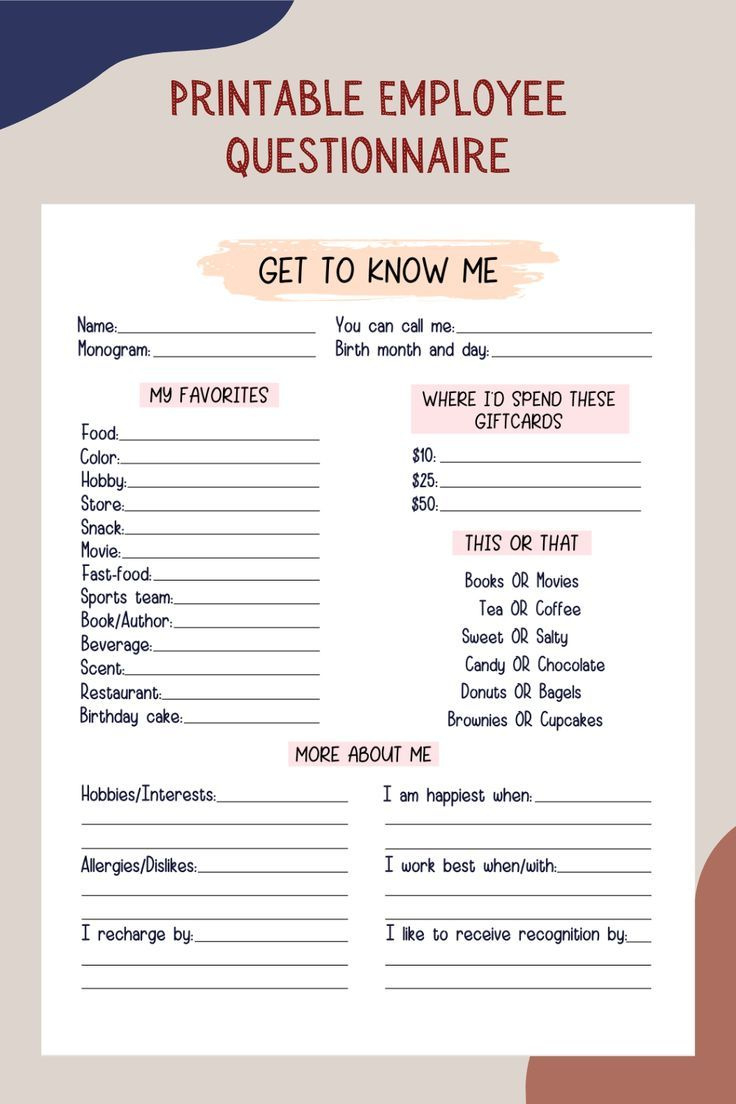
Creating a comfortable and engaging work environment is essential for team dynamics. One effective way to encourage interaction and understanding among employees is through a coworkers printable getting to know your employees questionnaire template. This template serves as a practical resource to help you learn more about your team members, fostering connections that can enhance collaboration and productivity.
Why Use a Getting to Know Your Employees Questionnaire?
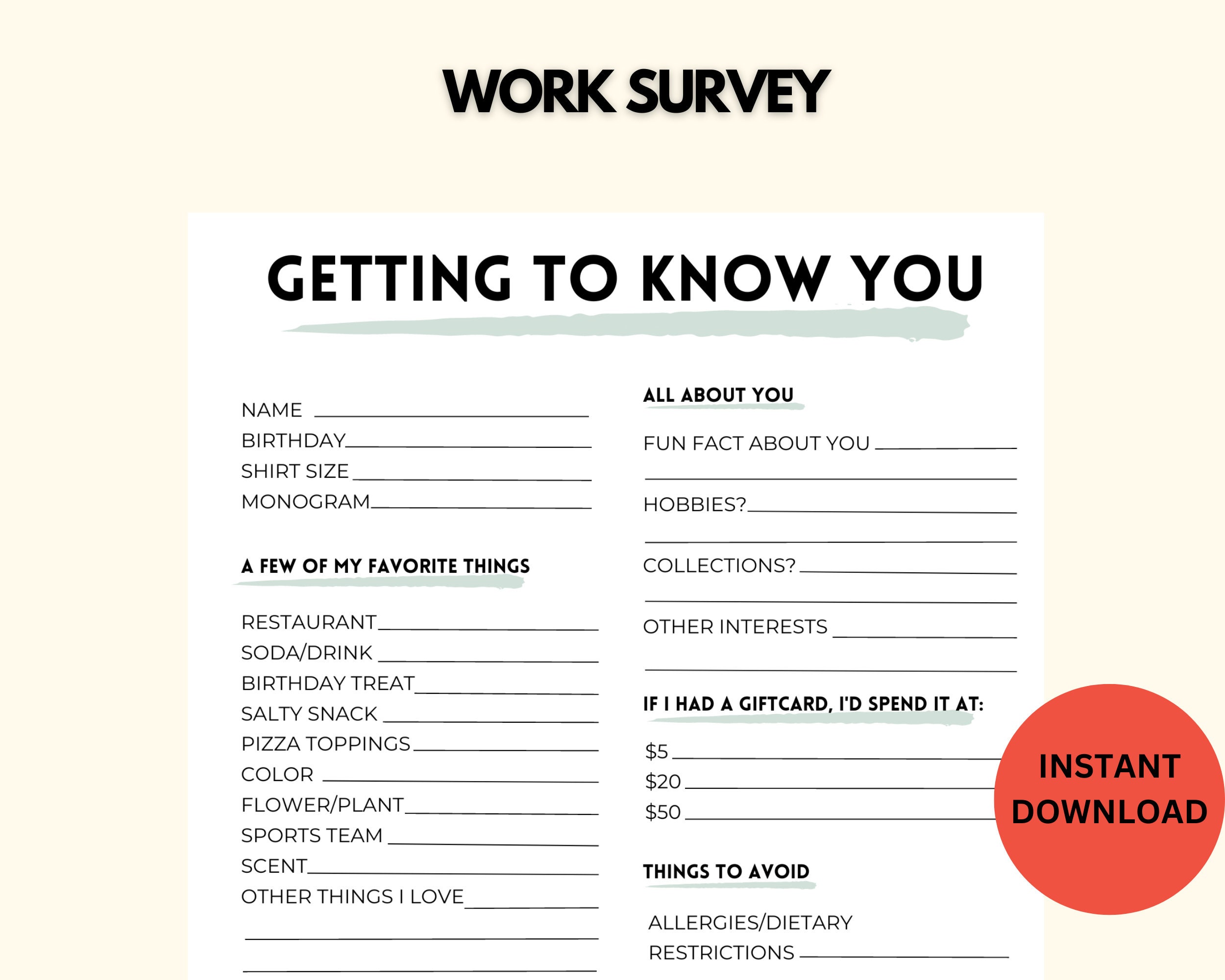
A getting to know your employees questionnaire is a straightforward tool that can yield significant benefits. It can help break the ice in a new team, create a sense of belonging, and promote communication. By utilizing a printable template, you can save time on designing your own, allowing you to focus on gathering valuable information about your coworkers.
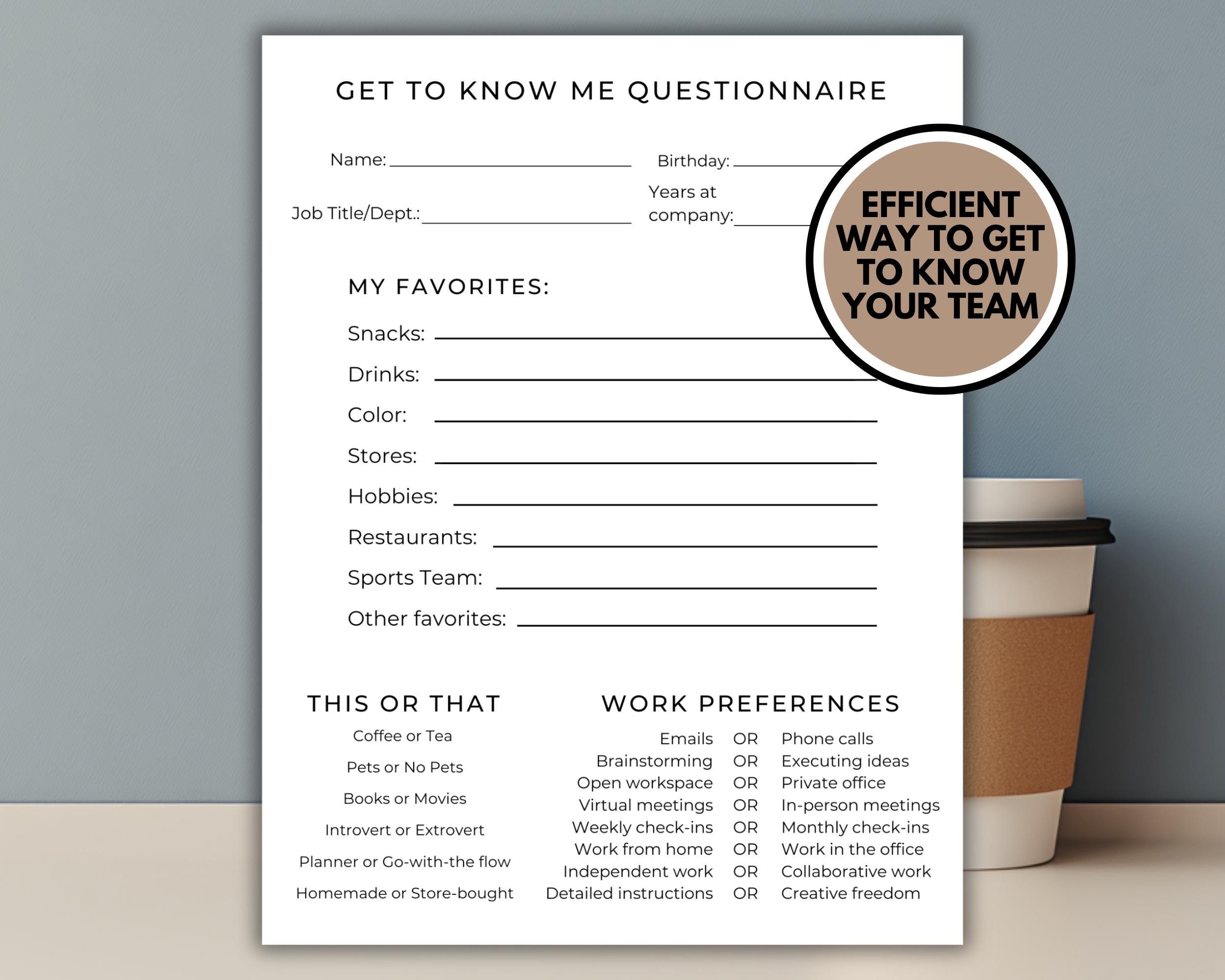
This questionnaire typically includes questions about personal interests, work preferences, and communication styles. You can adapt it to suit your office culture, making it more personal or keeping it professional depending on your team’s needs.
Customizing the Template for Your Team
The beauty of a coworkers printable getting to know your employees questionnaire template is its adaptability. You can customize questions to align with your workplace culture. Consider adding sections that reflect your team’s values and the interests of your employees.
Some common themes to explore include:
- Personal Interests: Ask about hobbies, favorite books, or travel experiences.
- Work Preferences: Inquire about preferred working styles, such as remote work or in-person collaboration.
- Communication Styles: Understanding how your coworkers prefer to communicate can lead to better teamwork.
Keep in mind that the questionnaire should be concise. Aim for a balance between gathering useful information and not overwhelming team members with too many questions. Around 10-15 questions is often a good range.
Downloading and Printing the Questionnaire
Once you’ve chosen or customized your template, the next step is downloading and printing it. Most templates are available in PDF format, which is ideal for ensuring that the layout remains consistent when printed.
When printing, consider the following:
- Paper Size: Standard letter size (8.5″ x 11″) is commonly used, but you might opt for A4 depending on your location.
- Quality: If you want a more professional look, using heavier cardstock can make a difference, especially if team members will be filling it out by hand.
- Print Settings: Always check your printer settings. A portrait layout usually works best for this type of document, ensuring that all questions fit neatly on one page.
If you plan to distribute this questionnaire digitally, consider providing a fillable PDF version. This allows team members to complete the questionnaire on their devices, making it more convenient for everyone involved.
Using the Completed Questionnaires
After your team has filled out the questionnaires, it’s time to use the information to foster a more connected workplace. Here are a few ideas on how to implement the insights gained:
- Team Meetings: Share interesting facts from the questionnaires during team meetings. This can serve as a great icebreaker and can help team members find common ground.
- Social Events: Use the information to organize team-building activities or social events that cater to the interests of your coworkers.
- Personalized Interactions: Refer back to the questionnaires when interacting with team members. For example, if someone enjoys hiking, you might ask them about their favorite trails. This shows that you value their responses and are interested in them as individuals.
By actively engaging with the information gathered, you can create a more inclusive and supportive work environment.
A Practical Tip for Immediate Use
As you prepare to implement this coworkers printable getting to know your employees questionnaire template, consider starting with a small group first. This allows you to gauge how well the questionnaire works and make any necessary adjustments before rolling it out to the entire team. It’s a simple step that can lead to more effective results and a better understanding of your coworkers.