
What this printable includes
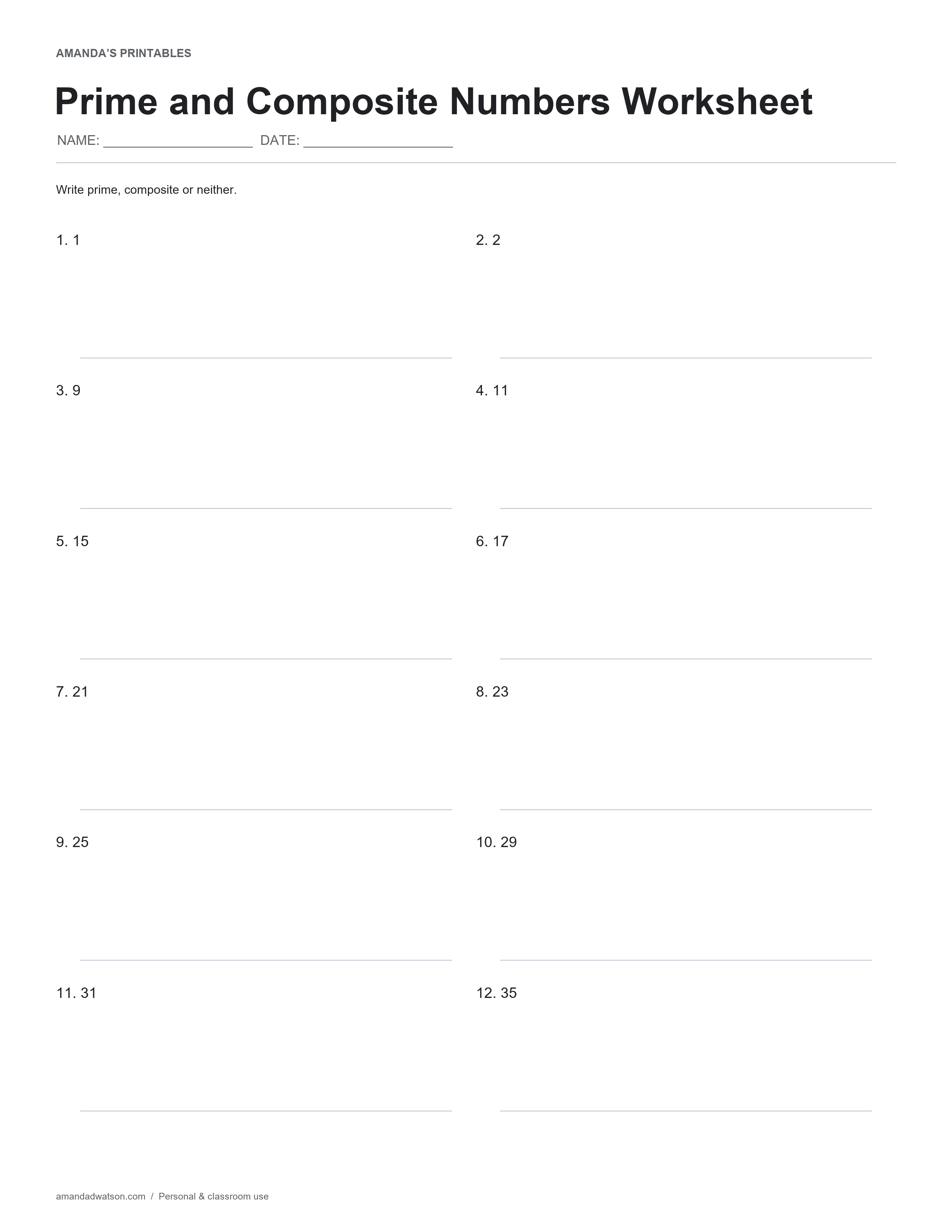
Classify twelve whole numbers as prime, composite or neither. The worksheet includes one, which helps make the definition more precise. A prime number has exactly two positive factors, while a composite number has more than two; one has only one positive factor.
How to use the page
Use factor pairs to justify a classification instead of guessing from whether a number looks large or odd. Two is prime even though it is even. Nine is odd but composite because three times three equals nine. Write the category and, where useful, a factor pair that supports the decision.
Review and adapt
Compare the work with the answer key after the learner has explained several examples. The page does not ask for classifications of negative numbers or fractions. Keep the definitions visible during early practice, then use a fresh copy later to see whether the reasoning can be recalled independently.
Answer key in text
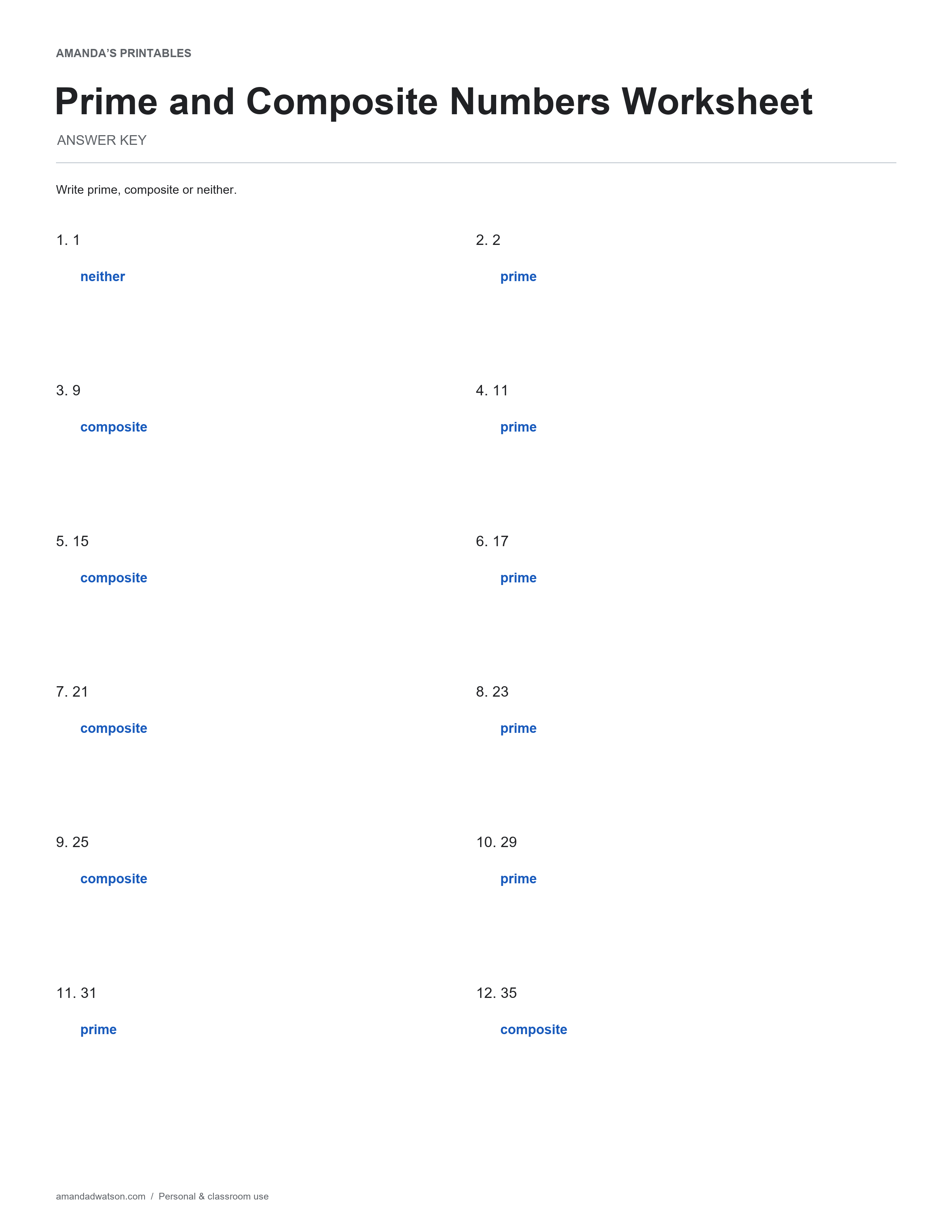
- 1: neither.
- 2: prime.
- 9: composite.
- 11: prime.
- 15: composite.
- 17: prime.
- 21: composite.
- 23: prime.
- 25: composite.
- 29: prime.
- 31: prime.
- 35: composite.
Printable answer page
Download and print
Save the original PNG with Download image below the printable. To make a PDF, select US Letter or A4 and use Download PDF; the website creates it from the image in your browser. Check the selected paper size, orientation and print preview before printing. Keep the whole page inside the printable area and use uniform scaling. These are flat pages, not fillable forms. Copies are for personal and classroom use; share the article link rather than redistributing or reselling the files.