
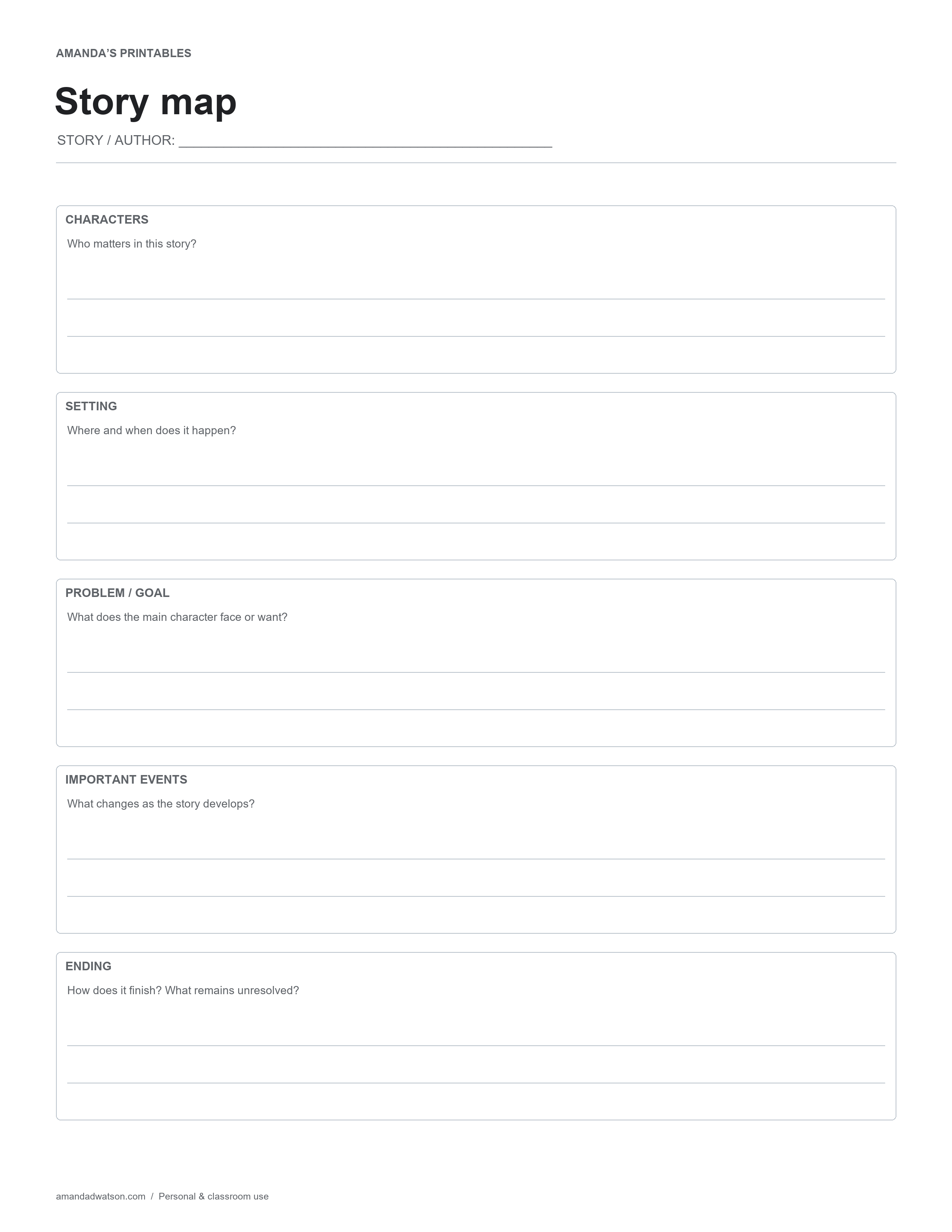
This story map template printable separates five story elements into clear writing areas: Characters, Setting, Problem or Goal, Important Events, and Ending. Use it to discuss a story you have read or to organize the main elements of a story you are preparing to write.
Name the story and author
Label the page before filling the sections. A title and author help distinguish the map from notes about another book. For an original story, use a working title and your own name. The page is blank and does not contain a model story or fixed answers.
Separate people, place, and purpose
The characters box identifies who matters to the story. Setting asks where and when events happen. Problem or Goal focuses on what a main character faces or wants. Keeping these notes separate makes it easier to see whether a summary is missing an important piece.
Choose events that change the situation
The events area is for a short sequence, not a sentence-by-sentence retelling. Ask what happens that moves the story toward its ending. Brief notes or numbered phrases can be enough; use another sheet if a longer sequence is needed.
Discuss the ending carefully
Describe how the story finishes and whether anything remains unresolved. For a classroom reading discussion, use evidence from the actual text rather than filling the box with what someone expected to happen. For planning an original story, the ending can be provisional and revised later.
This map includes an ending box, so a completed reading map may contain spoilers. Keep that in mind if sharing it with someone who has not read the story. For a public recommendation without revealing the ending, use the separate book-review page in the library.
Download and print
Use Download image beneath the printable for the original PNG. For a PDF, choose US Letter or A4 and select Download PDF; the website creates it from the image in your browser. Check the paper setting and print preview. These are flat printable pages, not fillable forms.
Print copies for personal and classroom use. When sharing online, link to the article rather than redistributing or reselling the files.